
Jaw Crusher vs Cone Crusher: Which Does Your Quarry Need?
2026-09-30
Choose a jaw crusher when large incoming rock needs primary crushing. Consider a cone crusher when suitably sized material needs further reduction. If your quarry processes large hard rock into several aggregate products, you may need both machines.
The choice becomes clearer when you define what enters the plant and what must leave it. Start there, then compare suitable equipment series and models.
Start with Your Rock and the Products You Need
Before looking at models, write down three things: the material, the largest feed size and the products you want to sell.
For example: “We need to process 200 t/h of granite, with a maximum feed size of 600 mm, into 5–10 mm and 10–20 mm aggregate.” This gives the supplier a starting point for checking the crushing stages and screening arrangement.
| Your starting point | Direction to evaluate |
| Large rock directly from the quarry | A jaw crusher for primary crushing |
| Already crushed rock that needs further reduction | A cone crusher matched to the actual feed |
| Large hard rock and several smaller aggregate products | Jaw crusher + cone crusher + screening |
| A coarse product with less demanding size requirements | Check whether jaw crushing and screening are sufficient |
earing feed. These conditions may require attention to feed preparation and screening, rather than simply choosing a larger crusher.
Be specific about finished products. A 0–20 mm mixed material is different from separate 5–10 mm and 10–20 mm fractions. That difference affects the screening arrangement and how much material needs further crushing.
Choosing a Jaw Crusher: PE or GC?
A jaw crusher must do two jobs: accept the incoming blocks and produce feed that the next stage can handle.
Check the largest pieces as well as the usual feed size. Long slabs or irregular blocks also matter. If the jaw crusher feeds a cone crusher, compare its expected discharge with the cone’s feed limits.
PE: Consider It for a Straightforward Primary Stage
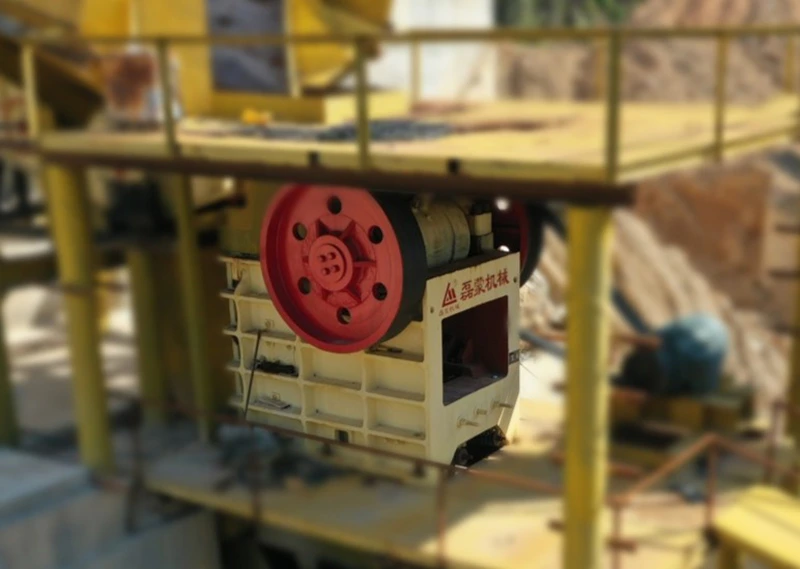
The PE series jaw crusher has a simple structure and is used for primary crushing in quarry and aggregate applications.
Include PE in your shortlist when straightforward operation and maintenance are priorities. If you are replacing an existing PE machine, check whether a suitable model can work with the current foundations and material-transfer arrangement.
GC Series Jaw Crusher
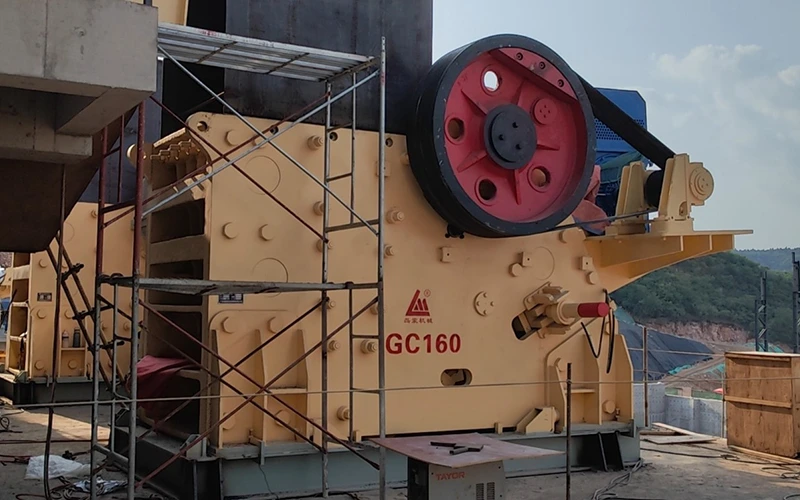
The GC series jaw crusher uses a modular, weld-free frame and an optimized crushing chamber.
For a new plant or an upgrade, compare a suitable GC model with the PE proposal using the same feed and required discharge. Check throughput, maintenance access and installed cost.
If both options meet the production requirement, decide using installation work, maintenance arrangements and total cost. Neither the series name nor the largest advertised capacity is enough to make the choice.
Choosing a Cone Crusher: DH/DS, HPY or S?
Start with the material that will actually enter the cone crusher. For an existing plant, use primary-discharge photographs and available size data. Then identify whether the new machine needs to accept relatively coarse feed or produce a finer product.
DH/DS Single-Cylinder: Check Feed Size First
Within the DH/DS range, DS models are worth checking for coarser secondary feed, while DH models provide options for smaller feed and further reduction.
For example, Leimeng lists maximum feed sizes of 560 mm for DS680 and 275 mm for DH680. If the expected largest feed is 400 mm, DH680 would fall outside that published limit. DS680 could remain on the shortlist, but its chamber, throughput and discharge still need checking.
This is a useful first filter: eliminate models that cannot accept the feed before comparing capacity or price.
HPY Multi-Cylinder: Evaluate It for Tertiary and Fine Crushing
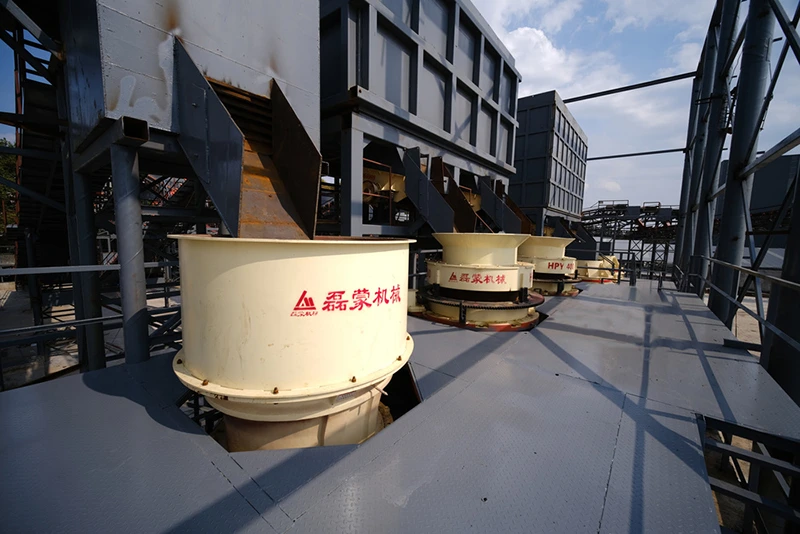
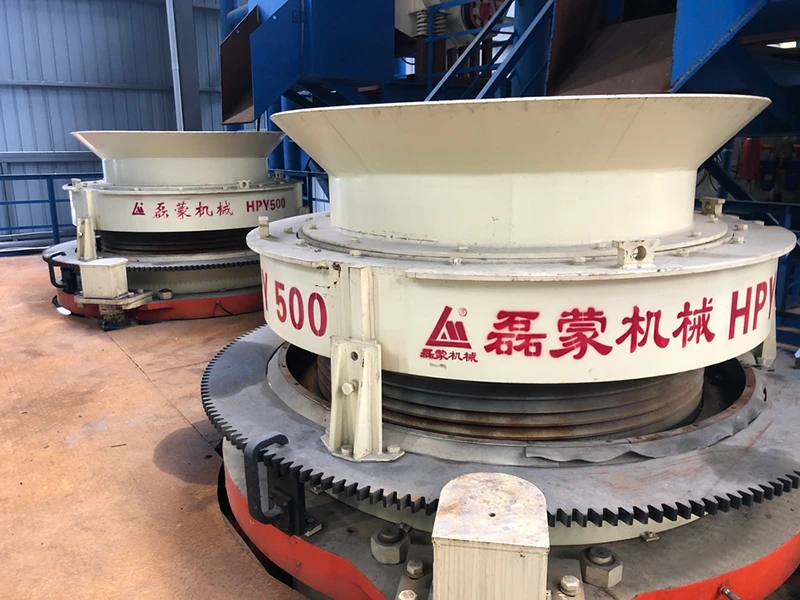
The HPY series is designed for tertiary and fine crushing. When selecting a model, check whether its chamber accepts the upstream discharge and whether the expected product grading meets your requirements.
Ask how the hydraulic setting adjustment and chamber clearing work, and include the screen and return conveyor when checking capacity.
S Series Spring Cone
The S series spring cone crusher offers standard and short-head configurations for different feed and output requirements.
If you already operate this type of crusher, include a suitable S model when comparing replacement options. Check the installation changes, adjustment method, wear-part availability and maintenance work alongside hydraulic alternatives.
The final comparison should be between models suited to the same duty. DH, HPY and S configurations may overlap in application; their suitability depends on the actual feed and required result.
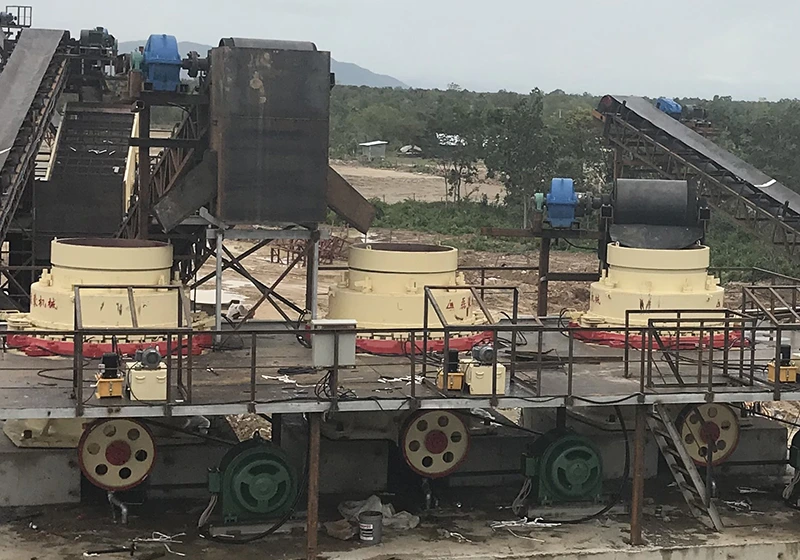
Check That the Machines Can Work Together
In a jaw and cone crusher plant, the jaw handles the first reduction, the cone continues crushing, and the screen separates the products. Oversized material may return for another pass.
That return material uses capacity again.
As a calculation example, 200 tonnes of new feed plus 80 tonnes of return material per hour means the cone crusher handles 280 tonnes per hour.
A cone selected only against the 200 t/h new-feed figure could therefore be too small for this assumed duty. Check the screen, return conveyor and transfer points against their respective material flows as well.
Also avoid treating the crusher setting as the finished product size. A 20 mm closed-side setting does not mean that every discharged particle is below 20 mm. The product still needs to be assessed through grading and screening.
Compare Proposals on the Same Basis
A useful quotation should connect the proposed equipment to your production requirement.
| Ask this question | Why it matters |
| Does the quoted capacity mean new feed, total crusher throughput or saleable output? | These figures can be different |
| What feed and settings support the estimate? | Capacity needs to relate to your actual duty |
| What product grading or yield information is available? | You need products your buyers can use |
| What equipment and installation work are included? | A bare machine and a complete circuit have different costs |
| How are wear parts replaced, and what is the supply lead time? | Maintenance affects production planning |
For an existing plant, explain the problem before requesting a larger machine. If material is accumulating at a screen or transfer point, adding crushing capacity alone may leave the restriction unresolved.
Compare electricity, wear parts and maintenance against saleable output—not just the purchase price.
FAQ
Can a cone crusher replace a jaw crusher?
Only when all incoming material suits the selected cone crusher. Large feed that exceeds its limits still needs suitable primary crushing.
Can one crusher produce my finished aggregate?
Sometimes, particularly for coarse products. Confirm the required grading and shape, then check whether one crushing stage with screening can meet them.
Can I start without a rock test report?
Yes. Provide the material, photographs, approximate feed sizes and production target. Further information or testing can be identified during the selection process.
Discuss Your Project with Leimeng Group
Send Leimeng Group your material, maximum feed size, required tonnes per hour and finished product sizes. For an existing plant, add site photographs and the problem you want to solve.
Our team can help shortlist suitable jaw and cone crushers and check how they fit into your crushing and screening process.